★ WIN Paws@Brooklyn The Valley Training Jacket and Spring Training Kit worth £210! Click here to enter ★

Fit for purpose: Ben Randall on working gundog fitness
Ben Randall explains why a working dog's fitness is built through purpose rather than exercise alone, and why the fittest dog is rarely the easiest one to handle in the field
 Credit: Sarah Farnsworth

A working dog’s fitness is something I feel is often misunderstood. Many people assume that the fitter the dog, the better the dog will perform, but in my experience it is not quite as simple as that. I am not a great believer in trying to get a dog super fit too early, because the fitter a dog becomes, the faster it often becomes. It thinks quicker, reacts quicker, runs harder, builds more muscle, gains more speed and strength, and with some dogs that can make them much harder to handle and control.
Easy does it: why a super-fit dog can boil over
When a dog’s blood warms up, especially on hot, exciting or scent-filled ground, a very fit, fast dog can boil over. It can go from being sharp and impressive to being too highly wired, too strong in the mind and too quick in the body. That is where the balance becomes so important.
At BG HQ, I have always given my dogs at least February and March as quieter months after the season. February, in particular, is a time for relaxation and recovery. They have worked hard through the shooting season, and I think it is very important that they are given time to mentally and physically come down. Then, through March, I slowly start to bring them back into some kind of gentle work again.
Train smarter: build fitness through the work itself
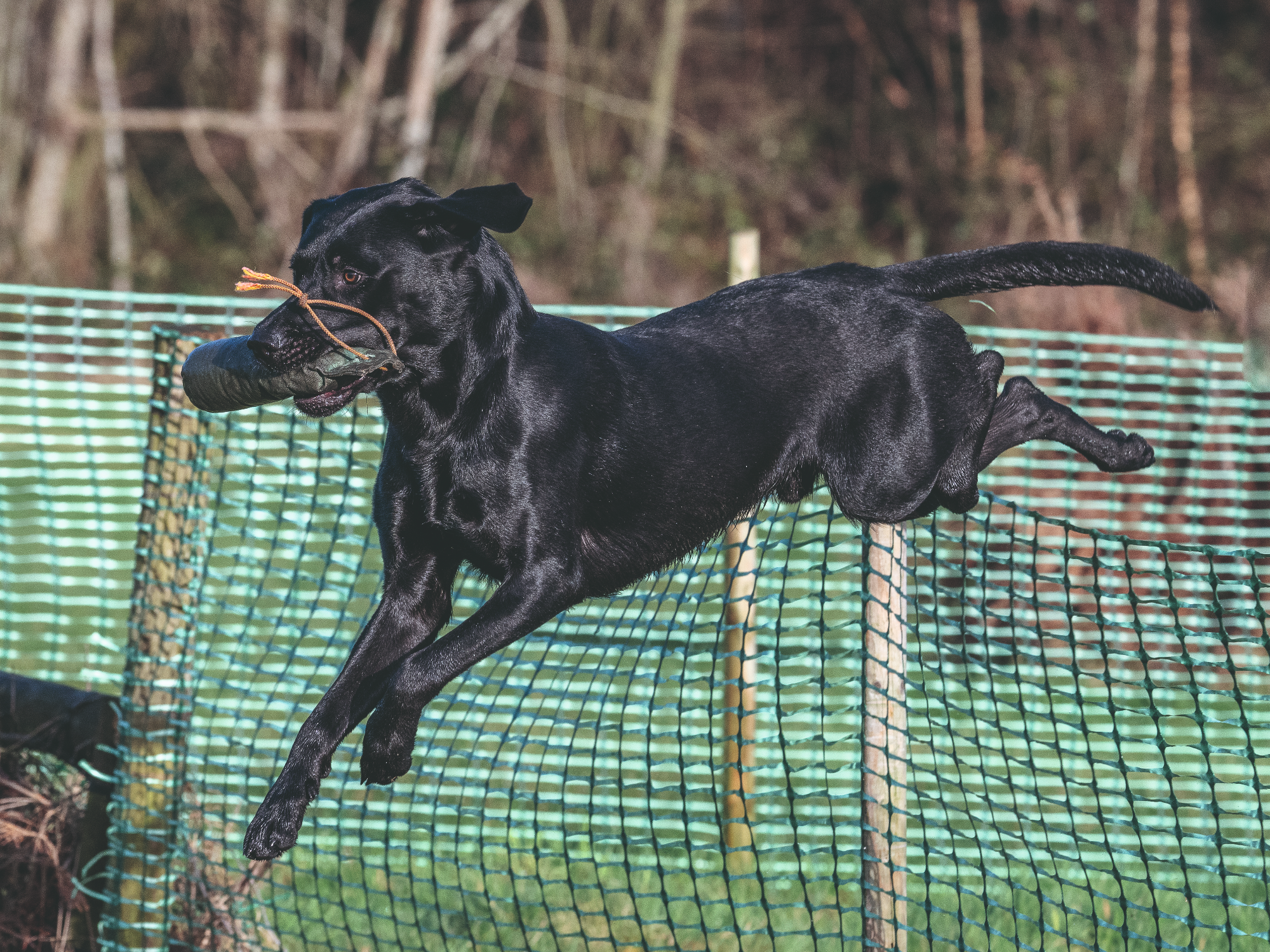
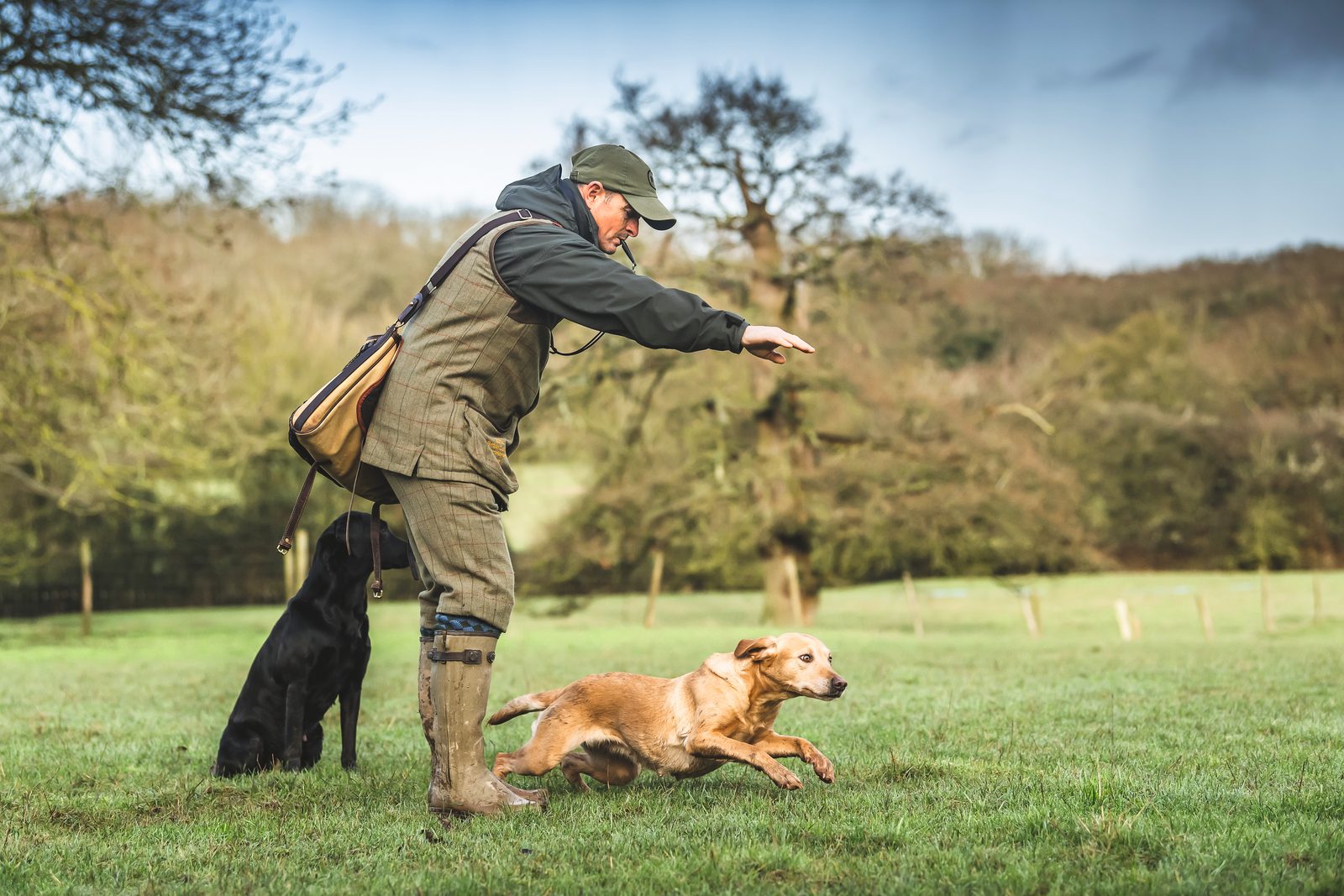
From April through to August, I have five months to slowly build them back up. During that period, I am not just improving their training; I am improving their fitness through the training itself. Their hunting, retrieving, blind work, directional work, jumping and swimming all become part of the fitness programme. I do not separate fitness from purpose. I do not just take a dog out to run for the sake of running, because that is not what I am preparing the dog to do.
When do I ever need a spaniel to run in a straight line for miles? When do I need a Labrador to run up and down a track following something for no real reason? I do not. What I need is a dog that is fit for the job it is going to do, whether that is competing, picking-up, being shot over, hunting cover, taking directions, handling pressure, jumping, swimming, marking, stopping, listening and using its brain while its body is working hard. That, to me, is real working-dog fitness.
Fuelling performance: nutrition, rest and recovery
Just as important as the work itself is the nutrition behind it. When you are building a dog’s fitness, you cannot separate training from feeding, rest and recovery. Whether someone feeds raw, a high-quality dry complete kibble, or a sensible combination of both, the important thing is that the dog is getting the right nutrition for the work it is being asked to do. Personally, I use a combination of both, because I like the balance it gives me, but the principle is always the same: the dog has to be fuelled properly, recovered properly and supported properly.
A working dog is an athlete, but it is still an animal first. If we ask it to hunt, retrieve, swim, jump, travel, compete and concentrate, then we have a responsibility to feed it in a way that supports muscle, stamina, condition, digestion and recovery. The right nutrition helps the body repair after work. The right rest allows that nutrition to do its job. It is not just about making a dog lean or fit; it is about creating a dog that can train, recover, settle, and then come back again with enthusiasm and soundness.
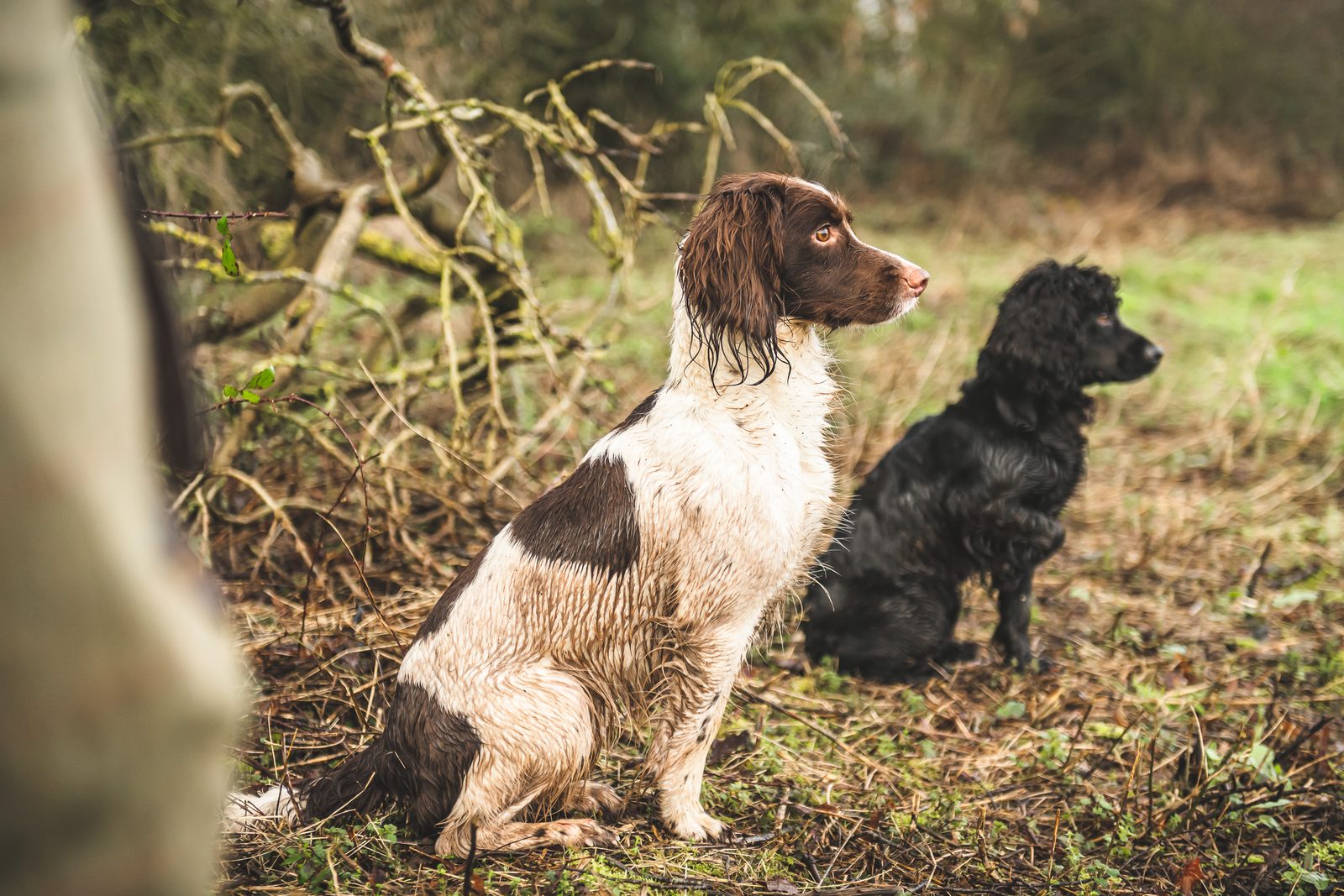
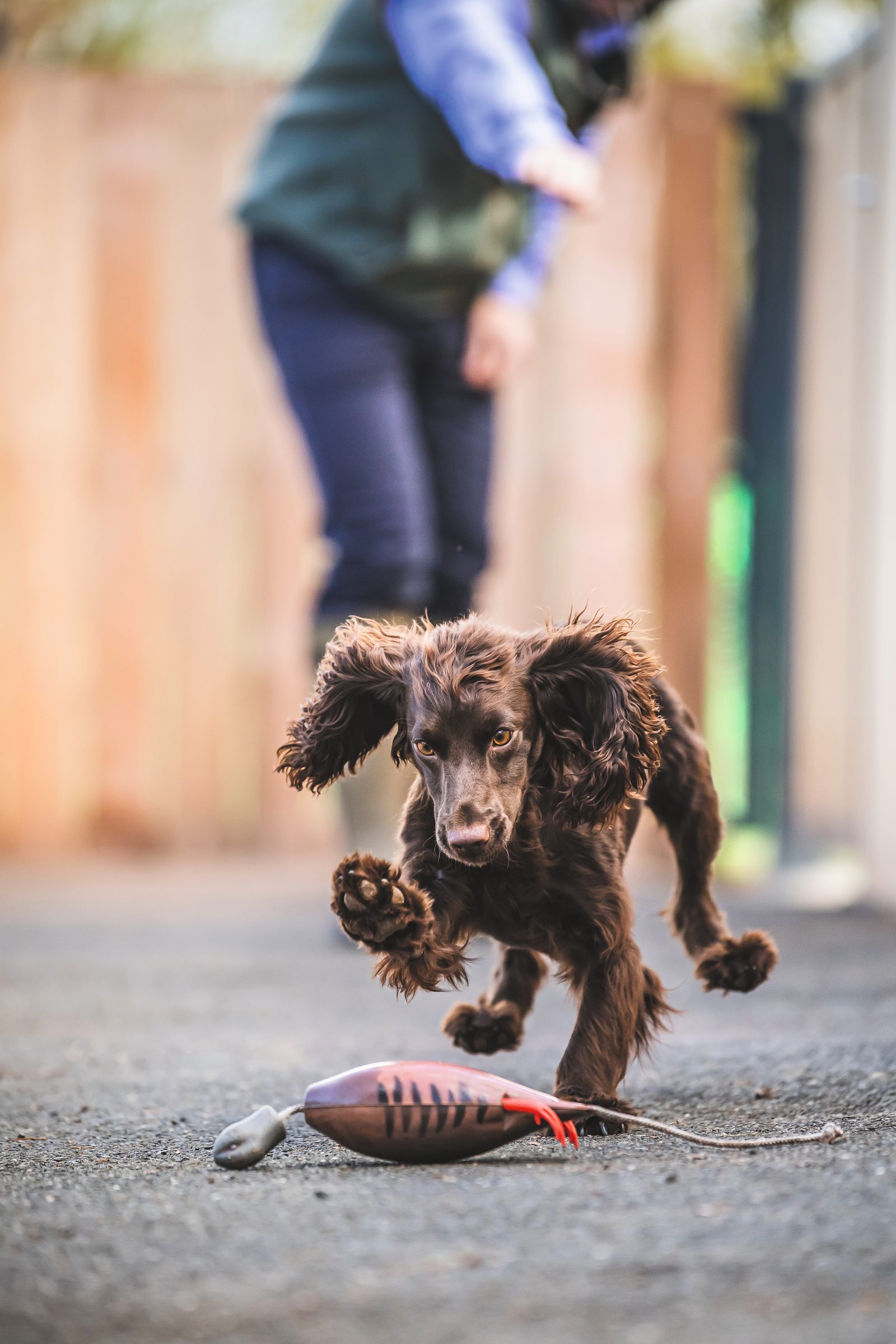
The full picture
For me, fitness is never just about exercise. It is the complete picture: the right work, the right food, the right rest and the right recovery. Get those things in balance and you are not just making a dog fitter; you are helping it stay healthier, calmer, stronger and more capable throughout the whole season.
Don’t peak too soon
I like to build a dog slowly towards certain competitions or shoot days. If competitions normally start in September, then July is a nice time to know the training is polished, and August can then be used to simulate the type of work the dog is likely to face. Through August, I will gradually increase the distances, the number of retrieves, the amount of hunting, the group training, the light training days and the little tests that make the dog understand what is coming. By the time September arrives, I want the dog to be prepared, confident and under control, but I still do not want it absolutely peaked.
That is an important point. If a dog is at full peak fitness in September, there is still October, November, December and January to get through. That is another four months of work, travel, excitement, competition, shoot days, cold mornings, warm days, scent, pressure and physical demand. A dog cannot realistically stay at peak performance for that long without something giving way, either physically or mentally.
I would rather see a dog arrive in September at around 60–70% fitness, then let the season itself bring that dog on. As the season progresses, the dog can build naturally towards 80–90%, depending on the individual dog. It is hard to put an exact percentage on it, but that is the kind of balance I like. If I have a dog with a wonderful temperament, a dog I can really trust, then yes, I may be able to get it a little bit fitter, a little bit leaner, a little bit sharper and a little bit faster. But there are not many dogs, in my opinion, that can be taken too far in that direction without consequences.
Fit for purpose: purpose-built working-dog fitness
I have seen so many people over the last 20 or 30 years, myself included at times, make the mistake of over-training and over-conditioning dogs. Dogs are being trained every day, sometimes twice a day. They are kept lean, athletic and switched on all year round. They look impressive, but they cannot always stay in that state. Some break down through injury, and others simply become too wired, too hyper, too fit and too quick to keep themselves together.
You see people running dogs on treadmills, behind vehicles, beside bikes, or doing long repetitive conditioning work. I am not saying there is never a place for structured fitness work, but for my own dogs, I do not believe they need that level of artificial fitness. What they need is purpose-built fitness for the job they are going to do.
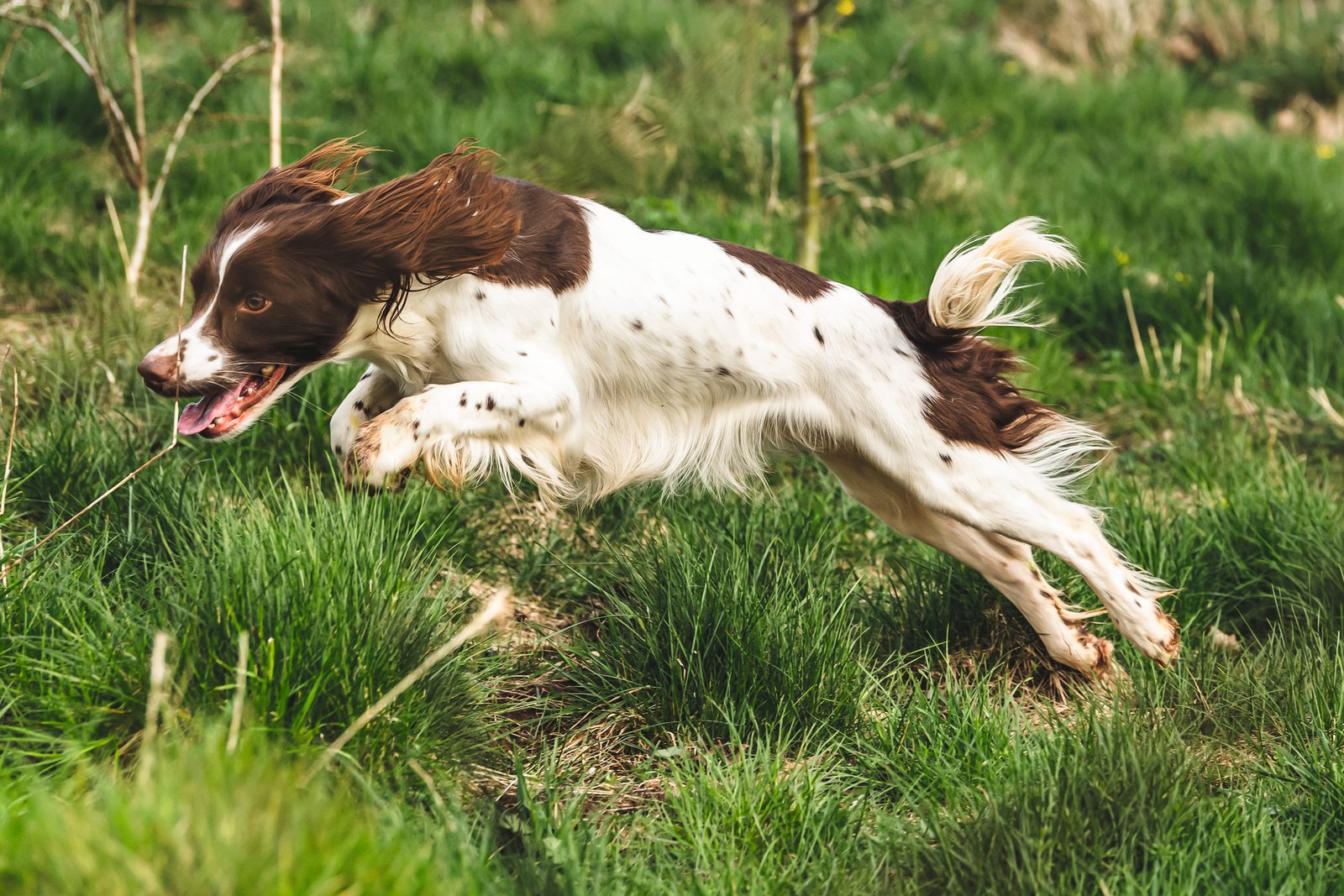
They need a good run once or twice a day to stretch their legs, use their muscles, empty themselves, clear their heads and feel like dogs. That does not mean endless roadwork, running behind vehicles, treadmill work or repetitive conditioning for the sake of it. It means sensible, natural exercise that supports the work they are being prepared for, alongside the right food, the right recovery and the right rest.
Just like an athlete, they need nutrition, a training programme and time to recover. But unlike a human athlete, we also have to remember the mind of the animal. We have to let the brain relax. We have to let the blood cool. I often think of it a little bit like horses. Some animals become hot-blooded when they are too sharp, too fit and too fired up, and once they are in that state they can become very difficult to control.
That is why I see fitness as something that has to be built through the right work, not just through exercise. A dog’s fitness should come through the hunting it is going to do, the retrieves it is going to take, the handling it is going to need, the cover it will face, the water it may cross, the jumps it may meet and the patience it must show when excitement is building around it.
Finding the sweet spot
For me, it is like driving a car. We all think we know when to accelerate and when to brake, but the skill is in feeling it before things go wrong. It is the same with a dog. You have to know when to push on and when to back off. You have to know when the dog needs more work and when the dog needs rest. You have to know when the fitness is helping the dog and when it is beginning to take the edge off its control.
In competition, a dog is not usually being asked to run a marathon. In theory, it may only have two short, fast runs. But, of course, that is only the theory. Sometimes a dog may need to work for 15 or 20 minutes. I have had long runs in competitions where a dog has worked for 30 or 40 minutes. On a shoot day, a dog may have several long retrieves, blank areas, heavy cover, repeated casts, long waits, cold stops and sudden bursts of hard physical effort. If you then get two demanding runs in a trial, or a long day picking-up with difficult birds, then the dog needs the heart and enthusiasm to keep going.
That is the balance I am always looking for: enough fitness to do the job properly, but not so much that the dog becomes too fast, too strong and too difficult to manage.
So when people ask how I prepare a dog for the shooting season, my answer is that I do it slowly, carefully and with the whole dog in mind. Fitness, nutrition, training and rest all have to work together. I am not preparing a machine. I am preparing an animal with blood, brain, instinct, drive, muscle, memory and emotion.
At BG HQ, the fitness programme is the training programme. The hunting is fitness. The retrieving is fitness. The swimming, jumping, handling, steadiness and long mornings in the field are all part of it. Everything has a reason. Everything has a purpose. The goal is not simply to create the fittest dog possible. The goal is to create a dog that is fit enough, strong enough, controlled enough and clear enough in the mind to do the job when it matters.
Frequently Asked Questions
How fit should a working gundog be at the start of the season?
Ben Randall prefers a dog to arrive in September at around 60 to 70% fitness rather than fully peaked, then let the season itself build the dog naturally towards 80 to 90%. Peaking too early leaves nothing in reserve for the four hard months of work that follow.
Can you make a working dog too fit?
Yes. A very fit, fast dog can become too wired, too strong in the mind and too quick in the body, which makes it harder to handle and control. Over-conditioned dogs can also break down through injury, which is why fitness has to be balanced against control and soundness.
What does Ben Randall feed his working dogs?
He uses a combination of raw and a high-quality dry complete kibble, because he likes the balance it gives. The principle matters more than the method: the dog has to be fuelled, recovered and supported properly for the work it is being asked to do.
Related Articles
Health
Gundog fitness
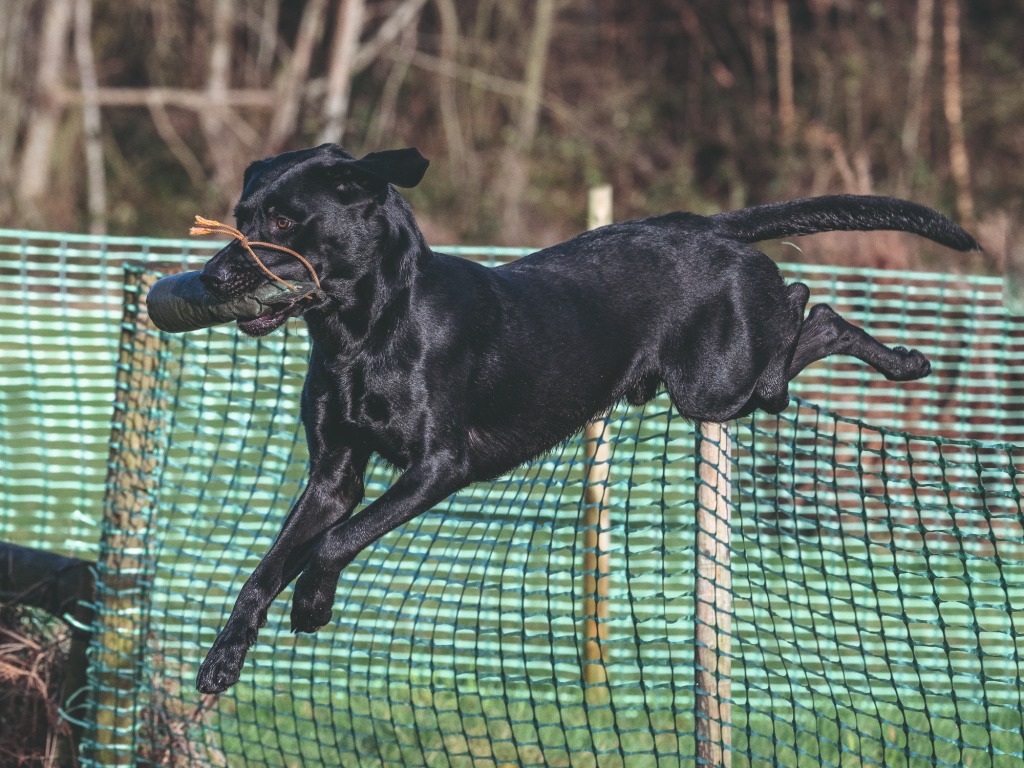
The summer months offer the perfect opportunity for gundog owners to work on their dog’s fitness ahead of a new shooting or competition season. Ben Randall explains how to train smarter, not harder,...
By Ben Randall
Health
Grass seeds in gundogs: dangers, symptoms and how to prevent them
Grass seeds may look harmless, but they can cause serious – and costly – health problems for working dogs, particularly during the spring and summer months when long grass is at its most prolific....
By Louisa Lane
Get the latest news delivered direct to your door
Subscribe to Gundog Journal
Unlock the full potential of your working dog with a subscription to Gundog Journal, the UK’s only dedicated magazine for gundog enthusiasts. Published bi-monthly, this authoritative resource delivers expert training advice, in-depth interviews with top trainers and veterinary guidance to help you nurture a stronger bond with your dog.
With stunning photography and thought-provoking content, Gundog Journal is your essential guide to understanding, training and celebrating your working dog.
Save 16% on shop price when you subscribe, with a choice of packages that work for you. Choose from Print & Digital or Digital only with each journal delivered directly to your door or via the app every other month, plus access to past issues with the digital back issue library.