★ WIN Paws@Brooklyn The Valley Training Jacket and Spring Training Kit worth £210! Click here to enter ★

Best gundog security products – a complete guide to keeping your dog safe
Rural dog theft is a growing threat to gundog owners, with organised criminal networks targeting working dogs specifically because of their value in the field and the specialist market that exists for them. This guide covers the most effective security measures for every part of your dog's life – at home, in the kennel, in transit and on shoot days – including the products and practices that make the biggest difference.
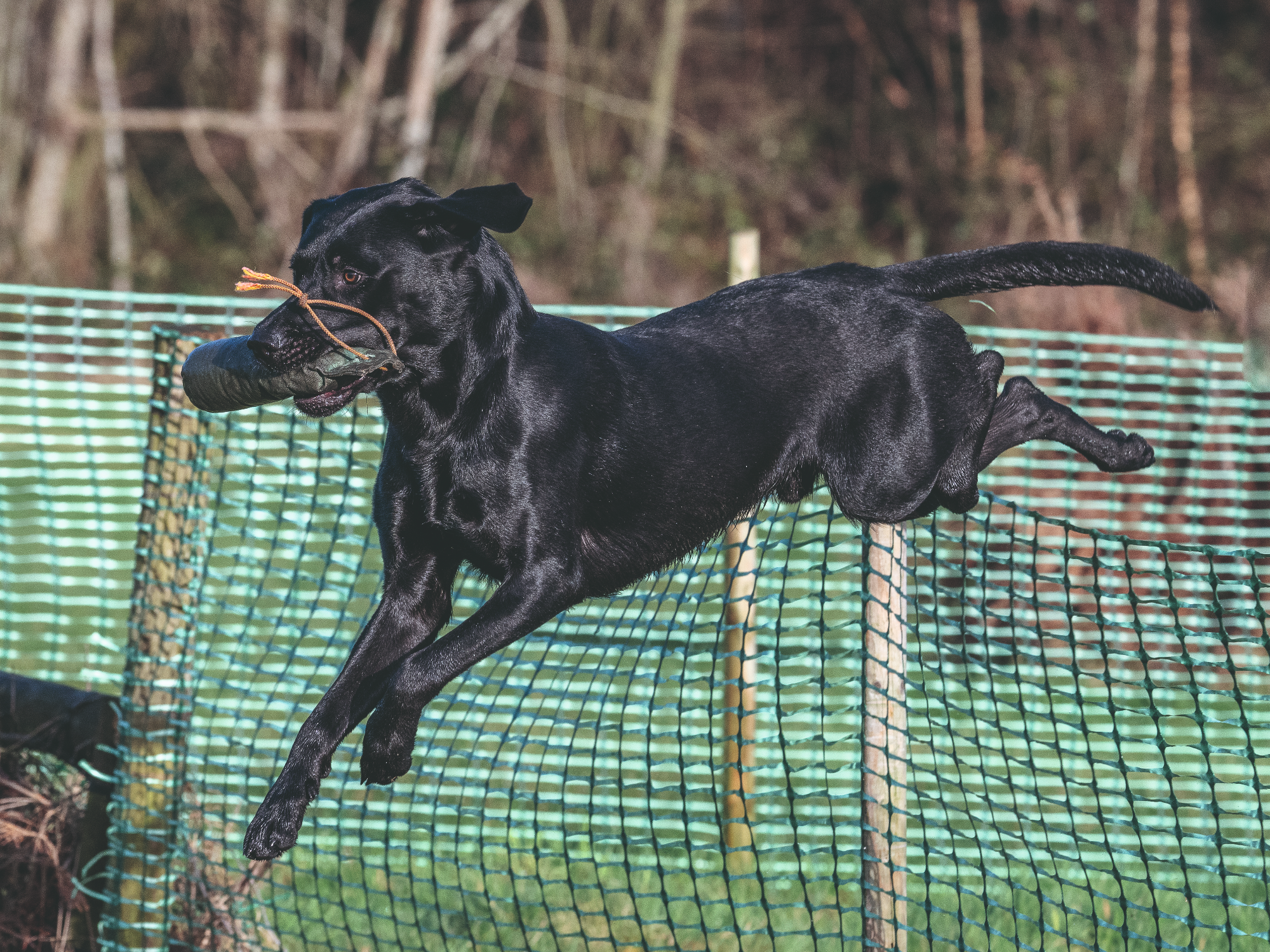
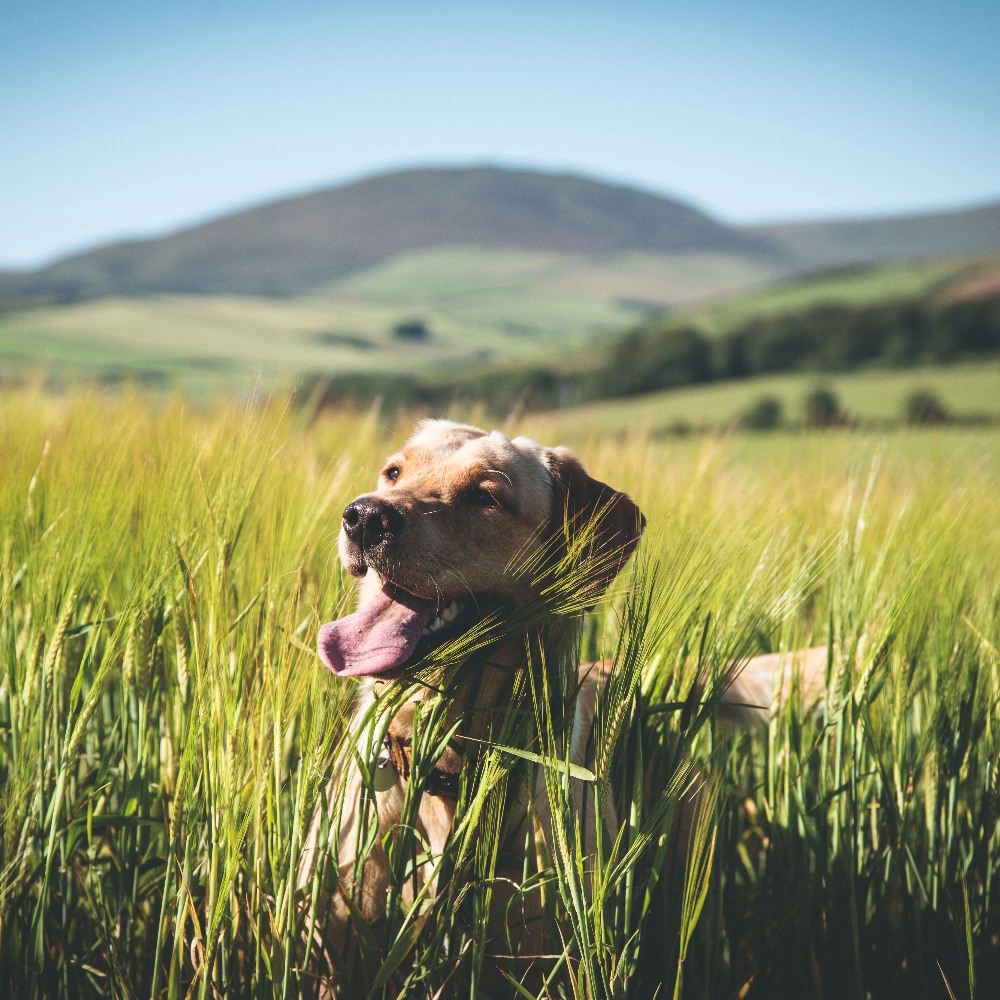
 Photographs: Sarah Farnsworth

Rural crime is rising, and gundogs are increasingly in the crosshairs. These are not pets in the conventional sense – they are working animals, often years in the making, bred from carefully chosen lines and trained to a standard that represents hundreds of hours of effort, patience and expense. They are companions of a very specific kind: trusted partners in the field whose loss cuts far deeper than any financial calculation can capture. Yet for a thief, a proven working cocker or a well-bred Labrador represents easy money – and demand has never been higher.
Dog theft in the UK rose sharply during and after the pandemic, and while some of that spike has levelled off, the underlying problem has not gone away. Organised criminal networks target working dogs specifically, aware that a proven field trial dog or a young dog from well-known lines can command serious money. Opportunistic theft – the dog taken from a vehicle at a shoot, the kennel raided overnight – sits alongside a more calculated threat from people who have done their research. The good news is that many thefts are preventable, and security needn’t be complicated. What it does require is a shift in mindset: thinking about vulnerability before it becomes a problem, not after.
What should I look for when buying gundog security products?
Effective gundog security is not about finding a single solution – it is about layers. The most resilient approach combines physical barriers (crates, locks, fencing), deterrents (lighting, CCTV), identification technology (microchipping, GPS tracking) and good habits (locking vehicles consistently, managing your social media presence). When evaluating any individual product, ask whether it increases the time and effort a thief would need to remove your dog. Even a modest increase in perceived difficulty is often enough to deter opportunistic theft, since most thieves are making a rapid calculation of risk versus reward.
Home and kennel security
For dogs that live indoors, the risks are broadly those of household security – good locks, visible deterrents, not advertising valuable animals on social media with location tags attached. That last point deserves emphasis. A photograph captioned “morning walk on the estate” with GPS data embedded, or a post mentioning that you will be away at a trial next weekend, tells a motivated thief more than you might think. Audit your social media habits as you would your front door.
Outdoor kennel dogs present a more complex challenge. A well-designed kennel complex should be treated with the same seriousness as any other outbuilding containing items of value. Perimeter security matters – solid fencing, a locked gate and good lighting will deter the majority of opportunistic thieves. Motion-activated lighting is cost-effective and surprisingly effective; most theft is a calculation of risk versus reward, and anything that raises the perceived risk tends to work in your favour.
Padlocks on kennel doors should be closed-shackle design – the type where the shackle is recessed into the body of the lock and cannot be attacked with bolt cutters. Standard open-shackle padlocks offer very little resistance to anyone carrying the right tools. Hasp and staple fixings should be heavy gauge and bolted through the door or frame rather than merely screwed, since screws can be pulled in seconds. CCTV coverage of the kennel area is increasingly affordable and modern systems allow you to monitor remotely via a smartphone. Some owners also use PIR-triggered alarms that alert directly to a mobile.
Microchipping is legally required and serves an important identification function, but it is worth being clear-eyed about its limitations in a theft scenario: a chip tells a vet or rescue centre who owns the dog, but only after the dog has been found. GPS tracker collars and harnesses have improved considerably and now represent a genuinely useful additional layer of security. If a dog is taken, the ability to track its movement in real time can make the difference between recovery and loss.
The kennel run
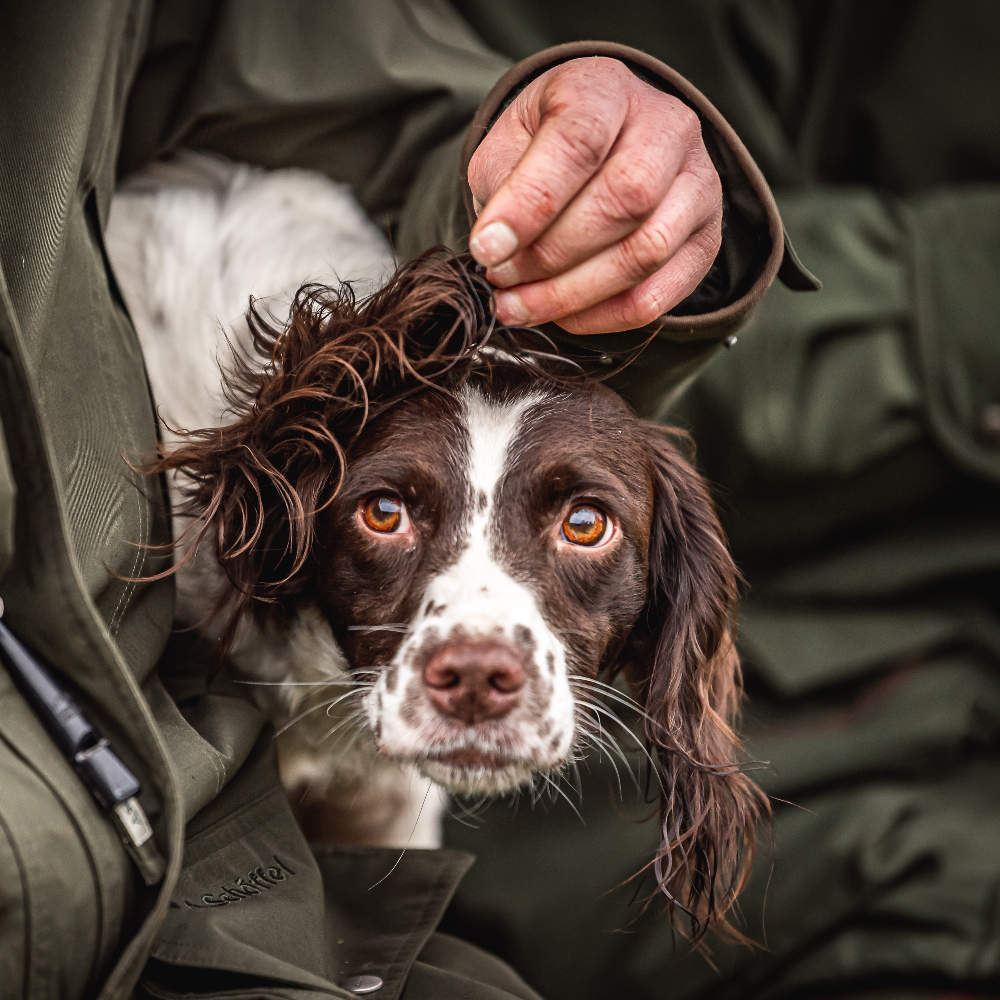
The run is often where dogs spend the greater part of their day. Steel mesh quality varies enormously – a run constructed from heavy gauge welded mesh panel fixed to a robust frame is a different proposition entirely from a lighter domestic dog run purchased from a garden centre. Check fixings regularly; ground-level panels in particular are vulnerable to being lifted or levered if the fixings corrode.
Consider whether the kennel complex is visible from a road or public right of way. Screening with hedging or timber fencing reduces visibility and, with it, the casual assessment of what might be worth taking. Good security is often as much about not advertising opportunity as it is about physical barriers.
The best dog crates for security in transit
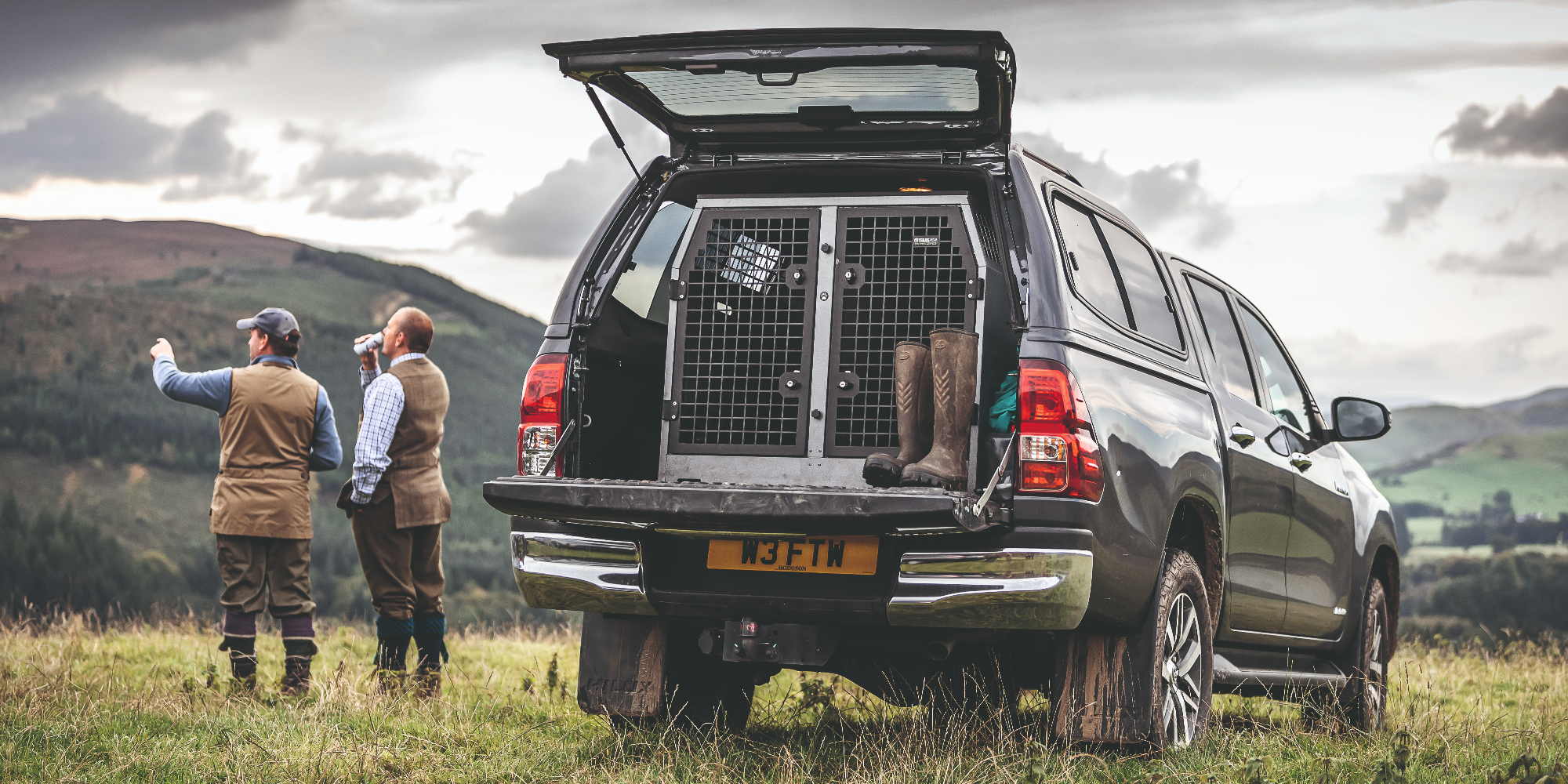
This is where many owners are at their most vulnerable. A vehicle containing gundogs – particularly at a show, trial or a country car park – is an attractive target. Dogs are visible, the vehicle may be left unattended for extended periods, and the environment is often remote enough to reduce the chance of intervention.
A well-built, vehicle-specific dog crate is the foundation of transit security – but not all crates are equal. The difference between a quality bespoke crate and a general-purpose travel crate is substantial: we are talking about the difference between a physical barrier that requires tools and time to overcome, and one that a determined thief can manage in moments.
DT Boxes
DT Boxes manufactures high-impact plastic crates designed to withstand extreme force and, crucially, not shatter in a collision – something cheaper alternatives often fail to achieve.
“In an accident, cheaper crates provide little protection,” the company notes. “Our crates are built so that even in a severe crash, they remain intact and continue to protect the dog.”
DT Boxes offers both twist-lock systems – useful when you have your hands full – and key locks for added security when the vehicle is unattended. The company also produces clip-on rechargeable fans designed to attach directly to crate doors, maintaining airflow while allowing the vehicle to remain securely closed. This becomes particularly important on shoot days or at events, where dogs may spend extended periods in vehicles.
Lintran
As Lintran points out, many crates on the market are designed simply to restrain a dog, not to protect it in an impact scenario.
“In a collision, a dog effectively becomes a heavy projectile,” a spokesperson explains. “A crate must absorb force, maintain its shape and prevent intrusion. Cheaper designs – often made from thin wire or lightly riveted panels – can collapse or shear apart.”
Lintran uses polypropylene construction, which avoids the temperature extremes associated with metal, helping keep dogs cooler in summer and less exposed in winter. Their key-lock and spring bolt systems have been developed over years of use, and units can be secured with anchor straps or mounted to drawer systems. Lintran reports a clear rise in demand for lockable dog boxes, driven in part by theft concerns – even extending beyond vehicles into outbuildings and kennels.
Tavo
For those prioritising crash protection alongside security, Tavo offers a range of premium carriers, all of which are occupant crash-tested to the latest R129 United Nations ECE child restraint standards. The latest model, the Everett, sits in the boot of the car and includes a secondary integrated lock, non-slip feet and quick-release tie-downs.
Both DT Boxes and Lintran highlight that security is layered and that a crate is only one part of the system.
“A secure dog box helps,” Lintran notes, “but thieves usually attack the vehicle first. Your vehicle is the first layer of dog security.”
Fixing crates within the vehicle is another often-overlooked detail. DT Boxes recommends tie-down or ratchet straps depending on crate size, while Lintran units can be secured with anchor straps or mounted to drawer systems. The goal is not absolute immovability, but added complexity for anyone attempting removal.

Security at shoot days and training
Shoot days and training sessions introduce predictable patterns – and therefore predictable risks. Dogs are often left in vehicles between drives or runs, handlers may be distracted, and there is a natural tendency to assume a degree of safety in familiar surroundings.
Consistency is key. Lock vehicles every time. Park with limited access to tailgates or load areas. Keep keys secure. A locked, well-secured crate significantly increases the time and effort required to remove a dog – and time is the enemy of any opportunistic thief.
Marking and recovery
Beyond physical security, there are steps that improve the chances of recovery if a dog is taken.
- Microchipping – legally required and the baseline for identification
- GPS tracker collar or harness – adds real-time tracking capability; products have improved considerably in recent years
- Current photographs – particularly of distinctive markings, scars or conformation features, stored somewhere accessible
- DNA profiling – some owners use schemes such as DogLost or breed society initiatives; this can be valuable in ownership disputes when a dog is recovered
- Social media appeals – rapid response matters if a dog is stolen; contact local rescue networks immediately
- Police report – obtain a crime reference number, which is needed for insurance purposes
A layered approach to gundog security
Effective security is rarely about a single expensive solution. It is about layers: vehicle, crate, environment, awareness. The approach is no different from training – good habits, established early, pay dividends for years to come.
| Security layer | Key measures |
|---|---|
| Home / indoor | Door locks, no social media location data, visible deterrents |
| Kennel | Closed-shackle padlocks, heavy-gauge hasps, CCTV, PIR alarms, GPS collar |
| Kennel run | Heavy gauge welded mesh, robust fixings, screening from road |
| Transit | Bespoke lockable crate, crate secured to vehicle with straps |
| Shoot day / training | Lock vehicle every time, park with restricted tailgate access |
| Recovery | Microchip, GPS tracker, current photos, DNA profile, crime reference |
Frequently Asked Questions
What is the best way to secure a gundog in a vehicle?
A vehicle-specific, bespoke dog crate is the most effective measure. Quality crates from manufacturers such as DT Boxes and Lintran use key-lock systems and are built to withstand both forced entry and impact. The crate should be secured to the vehicle using tie-down or ratchet straps to prevent removal. The vehicle itself is the first layer of security – lock it every time.
Do GPS dog trackers actually work?
Modern GPS tracker collars and harnesses have improved considerably and do provide real-time tracking capability. They are not a substitute for physical security, but if a dog is taken, the ability to monitor its movement in real time can significantly improve the chances of recovery. They are best treated as one layer of a broader security approach.
What type of padlock should I use on a kennel?
Use a closed-shackle padlock, where the shackle is recessed into the body of the lock. This design cannot be cut with bolt cutters in the way that a standard open-shackle padlock can. Hasp and staple fixings should be heavy gauge and bolted – not merely screwed – through the door or frame.
Is microchipping enough to protect my dog from theft?
No. Microchipping is legally required and is important for identification, but its usefulness in a theft scenario is limited: it identifies the dog only after it has been found. GPS tracking, physical security measures and good habits around social media and vehicle security provide more active protection.
What should I do if my gundog is stolen?
Report it to the police immediately and obtain a crime reference number, which is needed for insurance purposes. Contact DogLost and relevant breed societies. Post on social media – but remove any location tags from your own profile going forward. If the dog has a GPS tracker, monitor its location and share that information with the police. Current photographs of distinctive markings will help in any identification dispute.
Related Articles
Gear buying guides
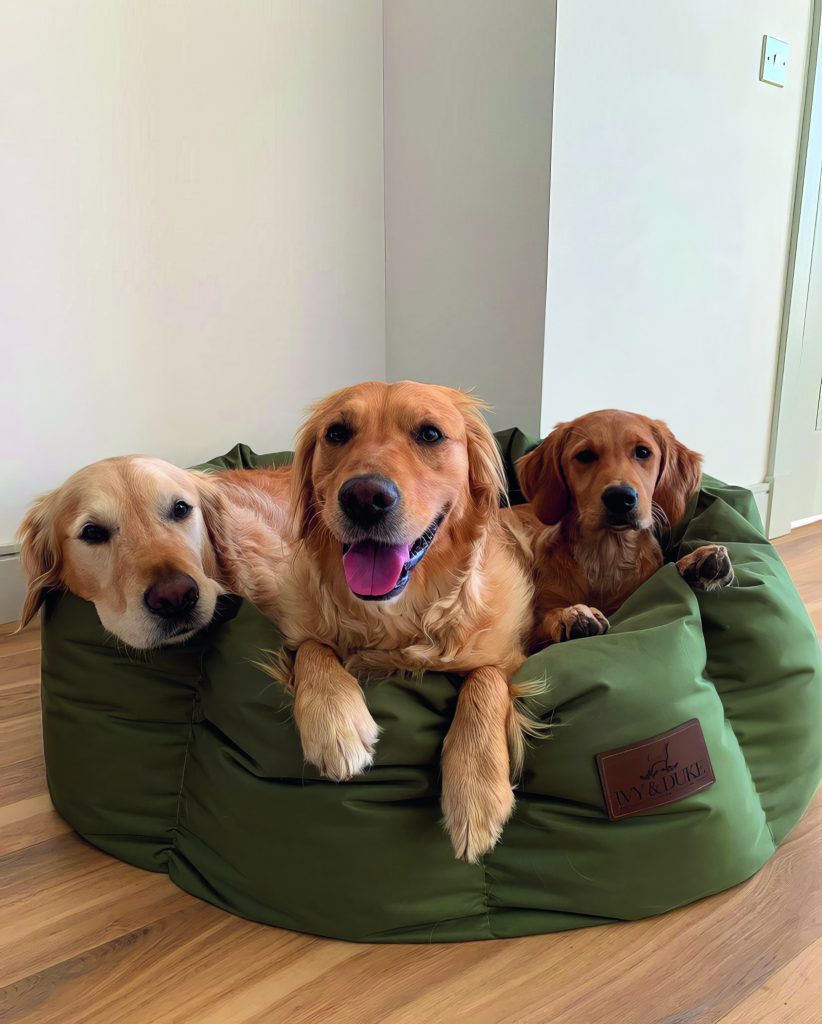
Six of the best dog beds
A selection of high-quality beds that combine luxury and practicality to meet the needs of dogs and their owners
By Gundog Journal
Competitions
Gear
Gear news
Ariat Clothing competition - your chance to win
Win a voucher for Ariat Clothing worth £200
By Gundog Journal
Get the latest news delivered direct to your door
Subscribe to Gundog Journal
Unlock the full potential of your working dog with a subscription to Gundog Journal, the UK’s only dedicated magazine for gundog enthusiasts. Published bi-monthly, this authoritative resource delivers expert training advice, in-depth interviews with top trainers and veterinary guidance to help you nurture a stronger bond with your dog.
With stunning photography and thought-provoking content, Gundog Journal is your essential guide to understanding, training and celebrating your working dog.
Save 16% on shop price when you subscribe, with a choice of packages that work for you. Choose from Print & Digital or Digital only with each journal delivered directly to your door or via the app every other month, plus access to past issues with the digital back issue library.