★ WIN Paws@Brooklyn The Valley Training Jacket and Spring Training Kit worth £210! Click here to enter ★
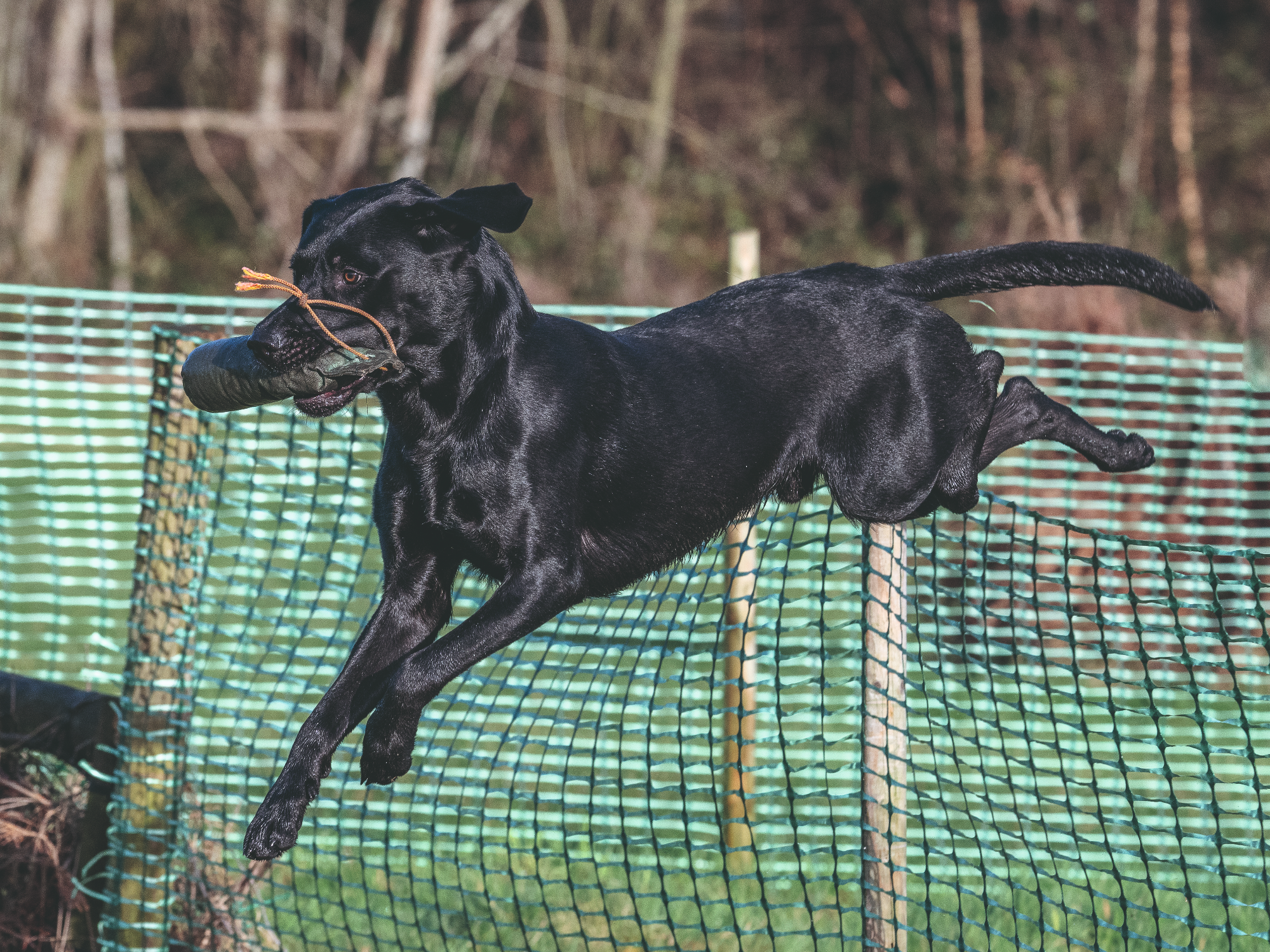

Training for working tests
How do you know if you and your gundog are ready for a working test? Ben Randall shares his thoughts on the key areas to focus on before taking that next step
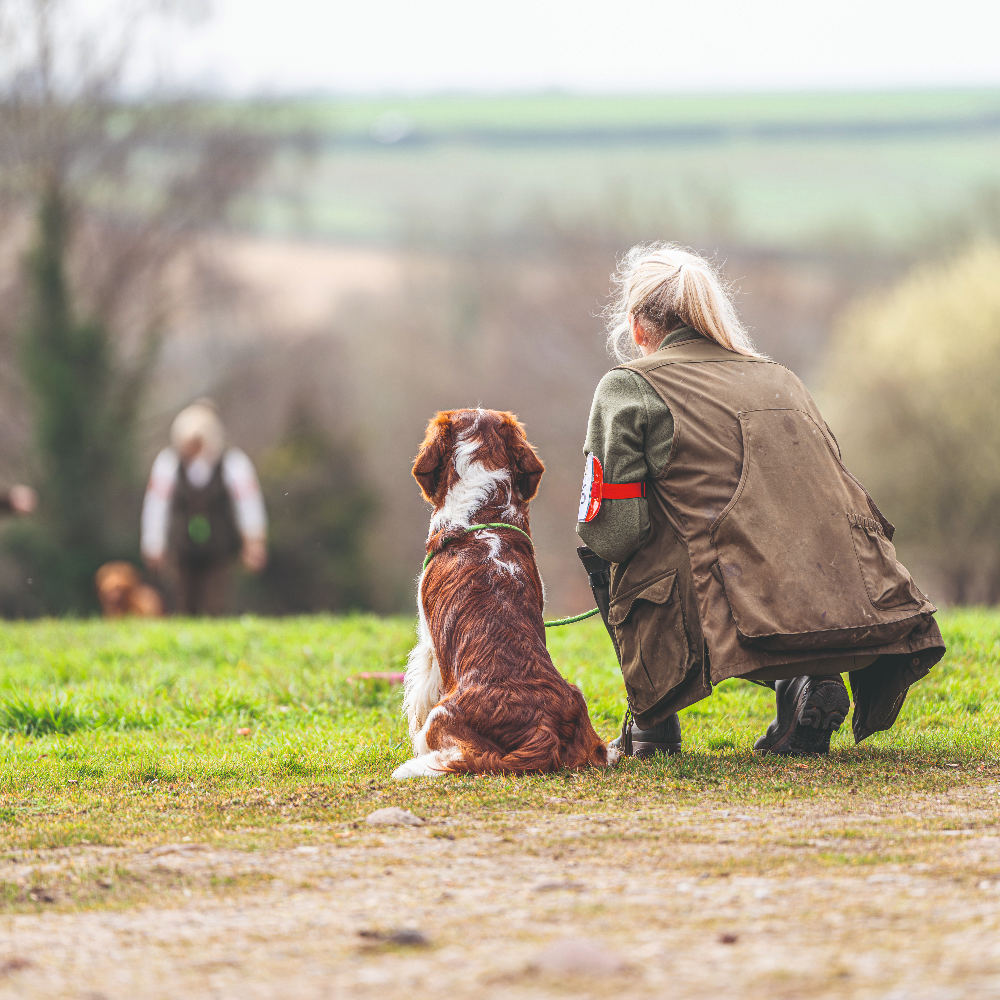 Photography: Kenny Drew

If you’re interested in getting involved in working tests with your dog, the first thing I’d recommend is reading the Kennel Club J Regulations so you’re fully aware of what’s expected of you and your dog in terms of the rules. Obviously, this won’t give you training advice on how to compete, but it does give you a solid understanding of the regulations you’re required to follow.
The Kennel Club website also provides a list of local and regional clubs. You can contact those nearest to you and look at joining some of their training sessions. Usually, there’ll be an experienced judge at the club who will offer guidance on whether they think you and your dog are ready to enter a test. That’s one of the positives of these clubs: meeting like-minded people with the same dog training aspirations. On the flip side, there’s always a risk the trainers may not be experienced enough and might advise you incorrectly. Often, people are told to ‘enter and learn as they go’, which can inadvertently set them up for failure. There’s enough pressure on a handler in a test setting without having the wheels fall off – and that’s not the kind of experience I want my clients to have.
The BG way
So how do I advise my clients here at BG? During individual lessons, our focus is on developing both the handler and the dog to the highest standard possible, taking into account the ability of the dog and the handler.
Once I’m personally confident that a client is potentially ready to enter a working test – after simulating this during lessons – I group them with others of a similar standard to practise test scenarios in a teaching environment. I’ll then suggest they attend a few group sessions with a club to test our training in a different setting. If all goes well, only then will I recommend entering a working test.
My aim is to give them the tools they need to achieve the best possible marks by advising on each element of the working test – this is particularly relevant for my spaniel handlers. As I’ve said before, it’s important to assess the ability of both dog and handler, and to set the right expectations before entering.
For instance, you may have a very capable handler working with a dog that lacks natural ability – this can be frustrating. On the flip side, you might have a dog with all the potential to win, but a handler who lacks the experience to bring out the best in it.
For spaniels, the majority of points in a working test are usually awarded for hunting, while seen and blind retrieves in each run tend to account for around 10–20 points out of a possible 100, depending on how the judges split
the marks.
A common mistake I see with spaniels is when a dog is awarded low hunting scores but high marks for retrieves. Why does this happen? It often comes down to a dog that hasn’t had enough exposure to scented ground, or whose handler has focused too much on the retrieving side of the test. The result is a dog that goes through the motions while hunting, simply waiting for the ‘bang’ that signals a retrieve, rather than hunting with purpose.
Another scenario is a dog that’s had lots of hunting practice and performs well in that area but has limited control on its handling work – particularly on blind and marked retrieves – because it’s too fixated on hunting. It’s human nature to focus on what’s fun or what the dog does well, rather than working on weaknesses. A good analogy is a Formula One driver who can hit 200mph on the straights but loses time at every corner because he hasn’t got the ability to take the bends at the higher speed.
So for me, the complete package for a spaniel would be: a good hunting pace and pattern with good control on its handling and its retrieving, as well as good ground treatment and use of wind. That is what is required to win at the highest level within that discipline.
Dealing with nerves on the day
When I have encouraged my clients to enter a test, that should say to them that I, as an A panel judge, believe they can compete and make a good account of themselves, as they have proven this to me time and time again during lessons. So this should give them the confidence to stay calm and focused during the tests. It’s normal for handlers to get nervous, but if we’re honest, the nerves often come from the fear that the dog will make mistakes, because it is still doing things wrong in training.
If your dog won’t always stop on the whistle, runs in, doesn’t deliver properly, or pulls too much when hunting – then you weren’t ready to enter. Unfortunately, many handlers are given poor advice from well-meaning club helpers or inexperienced trainers to ‘give it a go’ and ‘learn on the fly’. I take a more honest approach. Before a client enters a test, I’ll give a realistic expectation of what they should aim for – whether that’s a Certificate of Merit or a potential top-three finish – based on what I’ve seen in training. If you have a trainer with real experience, ask them to be honest with you.
Wising up
Another mistake I see happen a lot is when a dog becomes ‘test aware’. What does this mean?
You’re advised to take your dog to a test when it’s not really ready. Things go wrong. You then get advised to try again in a week… and again two weeks later. Before you know it, your dog is really misbehaving in a test environment.
Up until this point, you may have gone to your training sessions with two or three dogs in the car, and when you’re training you can, of course, correct your dog if things
go wrong.
But in the working test scenario, it’s different. You only put one dog in the car. You arrive at the test. Your dog doesn’t turn on the whistle or stop as it is meant to – but in this instance, there is no training involved because you can’t put your dog ‘right’ in this environment. It learns that this is a different environment, one where it can get away with more. After a couple of these experiences, your dog will think ‘I’m on my own again… I’m going to a place where I never get corrected.’ Your dog is now ‘test aware’ or ‘test wise’. It happens so quickly.
To avoid this, try to simulate the test scenario as often as possible. So, if you only have one dog, when you go to a training session try to use the time you have there to simulate the test environment the best you can. For example, let your dog wait on the lead for extended periods before it gets to work. This teaches patience – essential in a test environment, where dogs rarely go straight into action. I always train my dogs for the later numbers, because I want them calm and relaxed in the build up to their run.
Imagine a novice handler having a dog on the lead that’s fidgeting, lunging, pulling and whining. This will only be adding to the novice handler’s stress and worry about taking it off the lead. However, a dog laying at your feet in the shade, calm and patient, waiting for its turn, will only relax the handler, whether it be a novice or experienced trainer. If the dog doesn’t have this patience in training then it isn’t mentally ready for a working test and it needs to be taken back to earlier stages of training.
Final thoughts
This is how I personally look at tests with my clients. Some clients are extremely competitive and have aspirations to win, others just want to compete and do well. My job is to guide both kinds of handlers and make it as positive an experience for them as possible. My responsibility as an A panel KC judge and a professional dog trainer is to encourage as many people into our sport as possible. And by being as honest as I can with them, I can make it a much more pleasurable experience for them.
It’s a fantastic sport that tests the abilities of handler and dog combined. You get to meet people that share your passion, and listen to great stories new and old. And you get the privilege of competing on some of the UK’s most prestigious sporting estates with your dog.
So give it your best shot and set yourselves up for success wherever possible.
Related Articles
Competitions
WIN Paws@Brooklyn The Valley Training Jacket and Spring Training Kit worth £210!
We’ve teamed up with Paws@Brooklyn to offer the ultimate prize for gundog owners and trainers
By Gundog Journal

Events
News
England team announced for Skinner's World Cup
New captain Kevin Doughty unveils retriever team following new selection process
By Rebecca Green
Get the latest news delivered direct to your door
Subscribe to Gundog Journal
Unlock the full potential of your working dog with a subscription to Gundog Journal, the UK’s only dedicated magazine for gundog enthusiasts. Published bi-monthly, this authoritative resource delivers expert training advice, in-depth interviews with top trainers and veterinary guidance to help you nurture a stronger bond with your dog.
With stunning photography and thought-provoking content, Gundog Journal is your essential guide to understanding, training and celebrating your working dog.
Save 16% on shop price when you subscribe, with a choice of packages that work for you. Choose from Print & Digital or Digital only with each journal delivered directly to your door or via the app every other month, plus access to past issues with the digital back issue library.