★ WIN Paws@Brooklyn The Valley Training Jacket and Spring Training Kit worth £210! Click here to enter ★

The Clumber spaniel
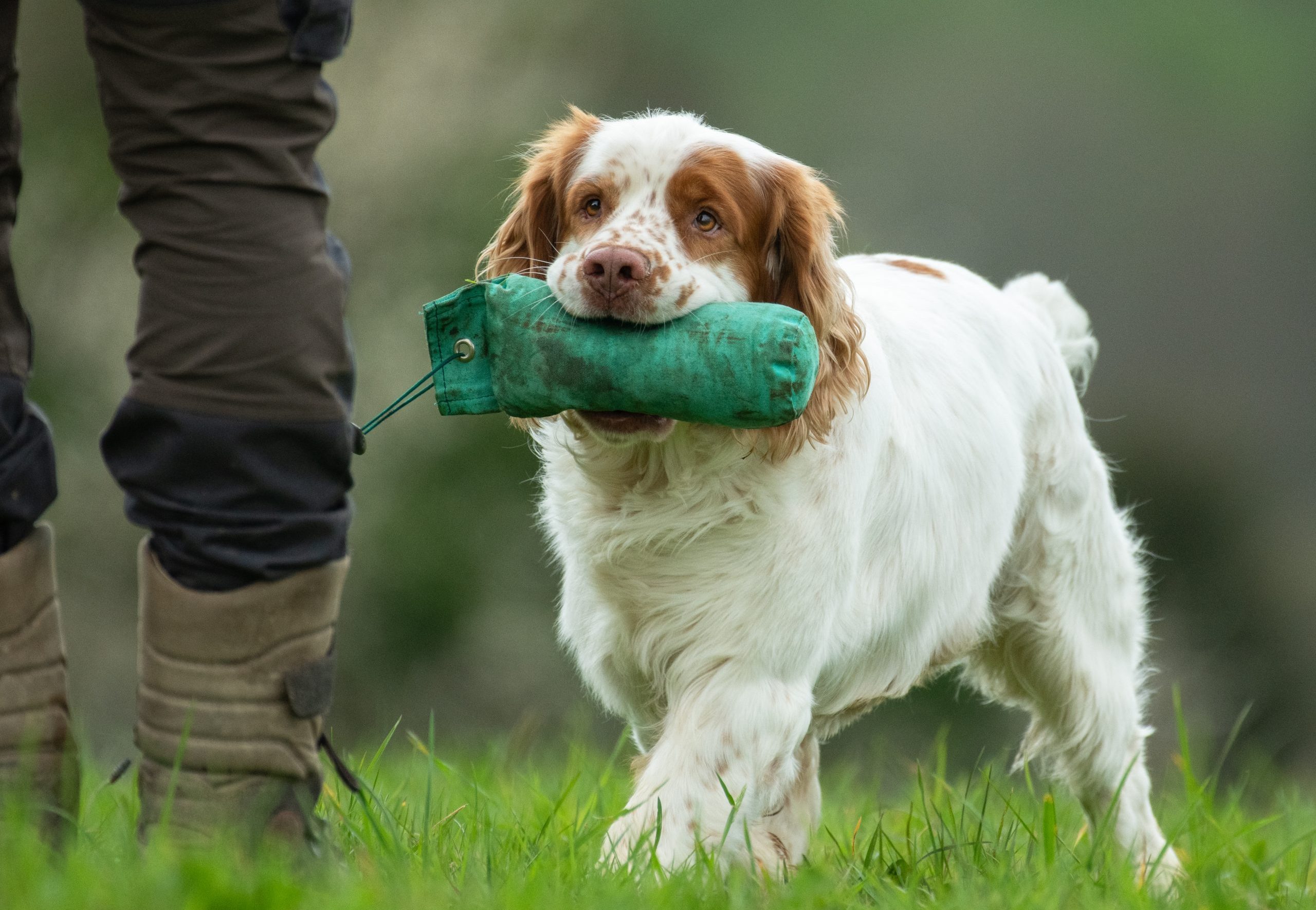
The modern-day clumber spaniel is a fantastic all-round gundog: fast and agile, with an excellent nose and soft mouth. As such, the breed is gaining recognition and popularity
 Photographs: Daisy May Dixon

History of the clumber
The clumber spaniel inherits its name from the illustrious park, Clumber Park, the seat of the Duke of Newcastle, who was the first to breed these wonderful dogs. The largest of the land spaniels, the clumber spaniel was developed by the Duke of Newcastle to work through the heaviest of undergrowth in his estate, in those areas that the smaller, lighter spaniels weren’t suited to. The breed club, the Clumber Spaniel Club (CSC), was formed in 1904 and along with it a breed standard was formalised.
The World Wars and the subsequent demise of large houses and their parks, along with shooting estates, saw the clumber spaniel fall out of popularity as a shooting dog. The breed survived primarily as a pet and show dog, and over the course of the 20th century became bigger, more exaggerated and heavier, with the breed standard showing an increase in weight several times. In 1984, a small group of clumber spaniel owners dedicated to using these dogs in the field came together to form the Working Clumber Spaniel Society (WCSS).
The WCSS worked tirelessly to improve the health, fitness and working abilities of these dogs. Thanks to the work of the society, clumber spaniels started to regain popularity as a working dog. The weight and structure of a working clumber is now more akin to the dogs that have been illustrated as working on the Duke of Newcastle’s estate in the 19th century.
The health of this breed has improved drastically, having progressed from a reputation of having the worst hip scores among all breeds to now seeing many dogs scoring single figures.
The working ability has been bred selectively, with the WCSS encouraging owners or breeders over the last 40 years to breed clumbers with proven working ability to other clumbers with proven working ability. The culmination of this is clumbers now being seen winning awards at AV working tests, AV field trials and the most successful clumber spaniel, Midori Diamond Huddlestone, winning an AV field trial.
More and more shoots are seeing clumber spaniels in their beating lines or picking-up teams, proving them to be a valuable choice as a shooting companion.
Breed health
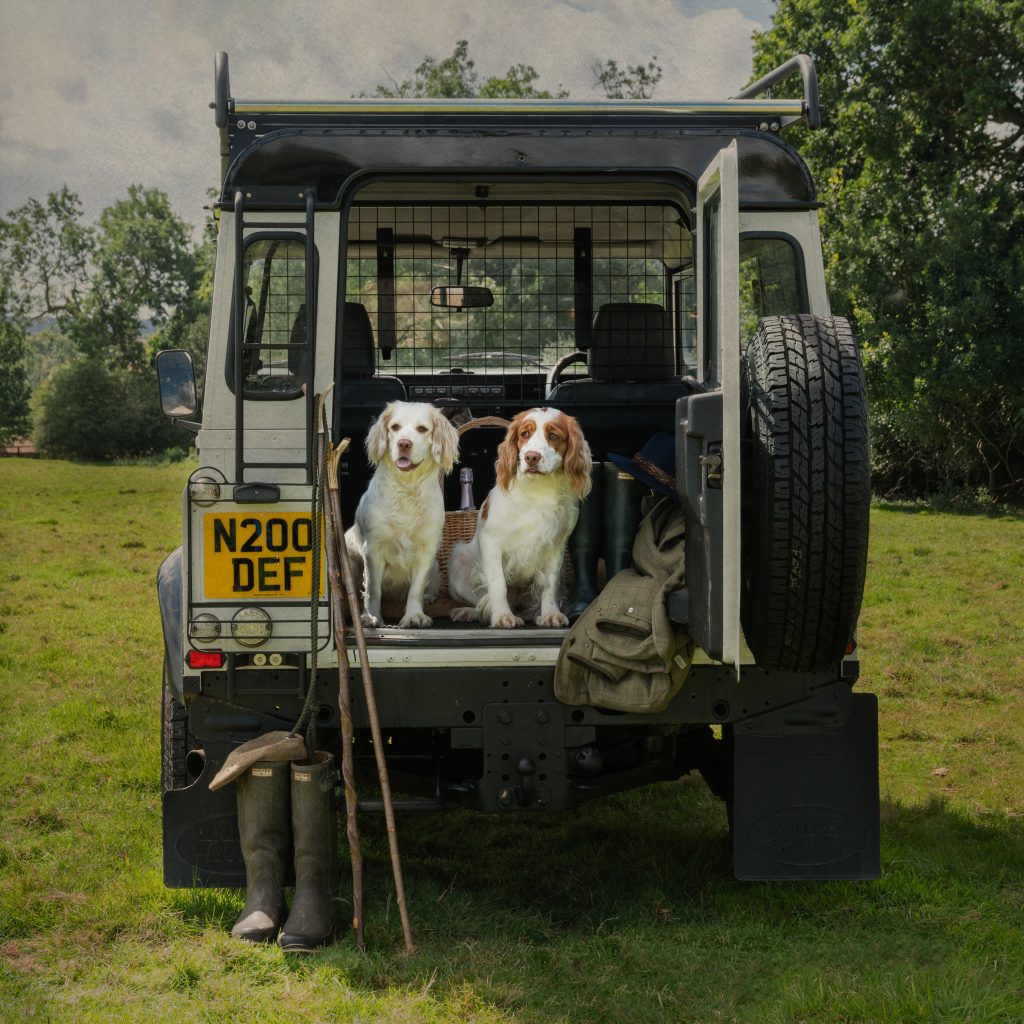
As with most breeds, there is a breed health coordinator appointed by the Kennel Club. There are also very active health teams in the WCSS and CSC who work together looking at the population, gathering data, supporting owners and spending time with vets, geneticists and genetic testing companies, among others. The main areas of interest within the breed are eyes, hips and elbows, a couple of hereditary disorders and back issues.
Eyes: Clumbers have a couple of areas that need attention around the eyes. The physical configuration is one such area. Significant progress has been made to improve the tightness of the eyes and reduce haw. We still see ectopian and entropian in the breed which, although undesirable, can usually be addressed with surgery. There is an emerging concern about PRA (progressive retinol atrophy) and steps are being taken by the health teams in the breed clubs to gather data to understand the penetration of PRA, both genetically and clinically. Over 50 dogs were tested by a BVA eye specialist at the recent WCSS AGM and the CSC also regularly run eye clinics at their meetings.
Hips: Hip scoring has been underway for many years with clumbers and there is a gradual and consistent improvement in the hip scores.
Elbows: Elbow scoring is more recent than hip scoring and in general clumbers’ scores from a dysplasia perspective are fairly good. We do also see incidences of IOHC (incomplete ossification of the humeral condyle) and HIF (humeral intercondylar fissure) within the breed which is a complex issue. The breed health teams monitor research in this area and disseminate information among their memberships as new information comes to light. They also gather data via health surveys and partnerships with genetic testing companies to try and further understand the situation within the breed.
EIC: Exercise-induced collapse came to light several years ago within the breed as a few clinically affected dogs were genetically tested and shown to have the same genetic markers as other breeds suffering from the disorder. Thus far, where it has occurred in dogs it has been managed through lifestyle changes.
Backs: Across the breed as a whole, we do see some back problems. This is in line with other relatively long-backed dogs.
More information on all of these health issues can be found on the WCSS website along with results from a recent data gathering set of surveys. Results for specific dogs can usually be found on the Kennel Club website where results have been submitted.
Working tests and trials
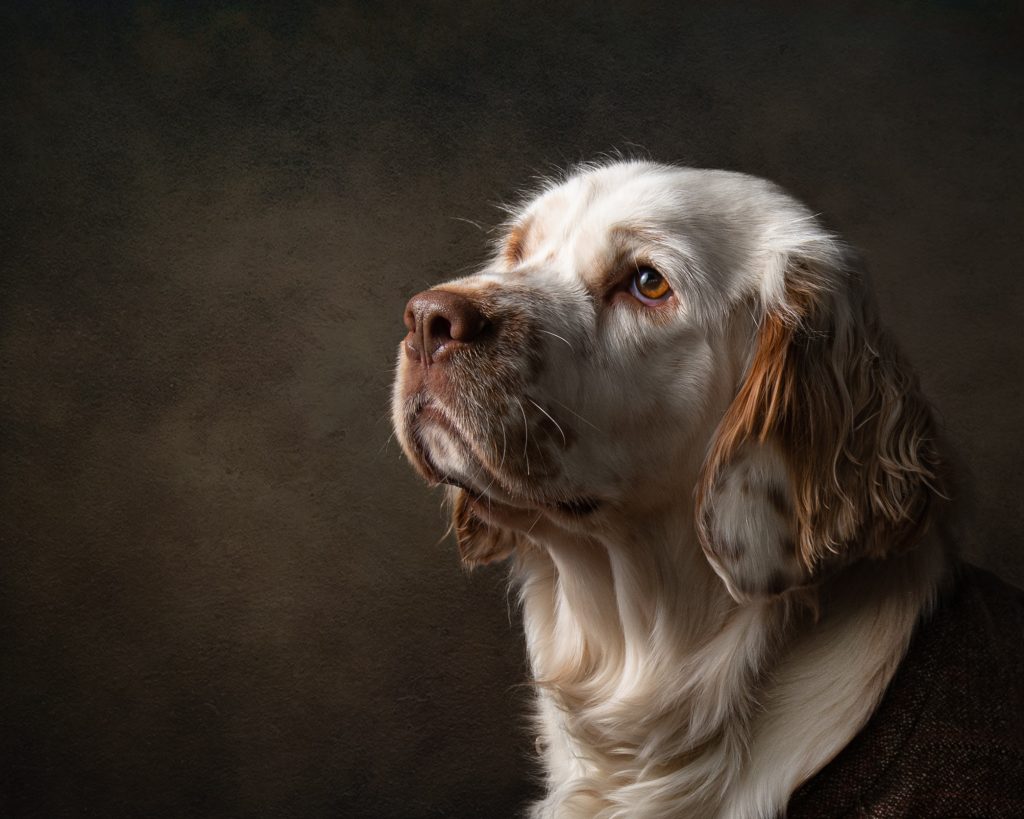
In order to showcase this outstanding breed to a broader audience and highlight its impressive working ability, the Working Clumber Spaniel Society organises
three working tests and two field trials annually. These events are held under Kennel Club rules and regulations J and offer chances for the working clumber spaniel to exhibit its remarkable abilities, assessed against the standards applied to other spaniel breeds in a competitive environment.
Notably, an increasing number of working clumbers are gaining recognition at AV working tests and field trials, competing alongside other spaniels. In the working tests, the dogs use dummies rather than live game and because these are a less pressurised day they are often used as a prequel to entering a field trial. Observing these white spaniels hunting in pairs through the undergrowth and sitting patiently to flush, hoping that the Gun has achieved a clean kill, is a pleasure to behold. Upon command, the dogs eagerly retrieve, with the clumber utilising its distinctive pink nose to locate the fallen bird. Its tail movements and body language provide cues to the handler that the dog has found what it was looking for. With joy in its stride, the clumber dutifully delivers the retrieve, signifying a job well done. These competitive events not only demonstrate the working clumber spaniel’s capabilities, but also serve to showcase to the gundog community that they can be regarded as the third spaniel of choice.
In the shooting field
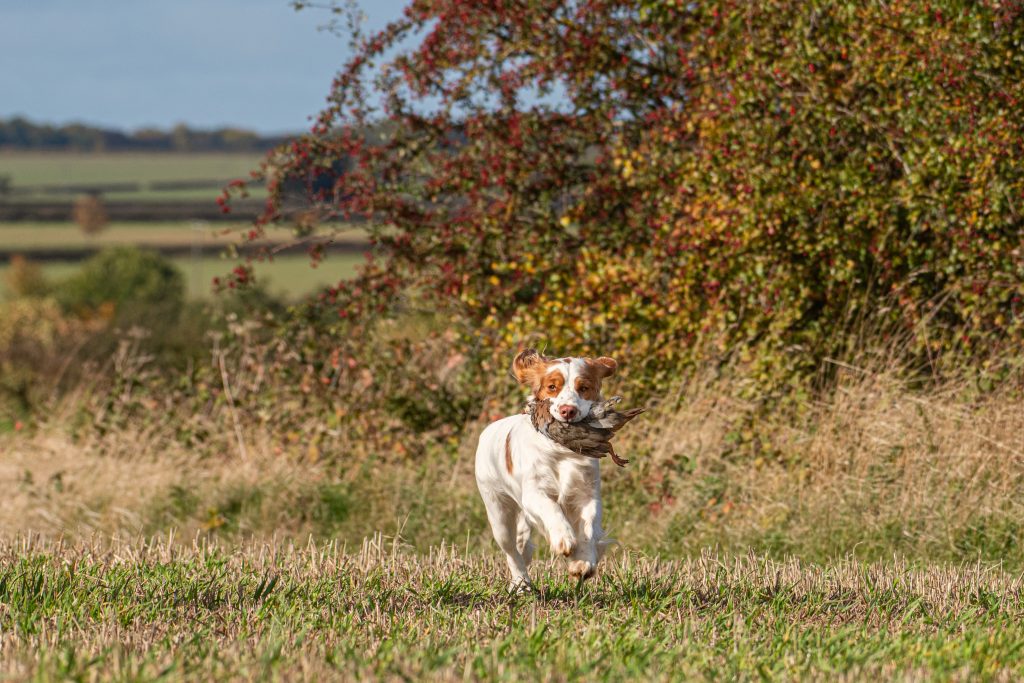
The clumber’s large pink nose puts it head and shoulders above other spaniels when it comes to finding game. Whether it’s flushing grouse from a warm moor in late summer or bashing through freezing brambles in January, scent drives the clumber’s desire to hunt. Their hunting is more considered than the frantic patterns of some other spaniels, meaning it is rare that a clumber will fail to find its quarry. Gone are the days of the slow, plodding, big white spaniel. In the 40 years since the formation of the Working Clumber Spaniel Society the modern working clumber has become a fast and agile spaniel that covers ground with pace and stamina. As with any spaniel, clumbers not only hunt but make excellent retrievers too. With soft mouths, they deliver game diligently to hand.
As the popularity of the breed continues to grow it is not unlikely that you will see a clumber or two in the picking-up team on some of the large estate shoots around the UK – using that big nose to devour the scent of game to drive hunting to seek out the next retrieve. The clumber is a fantastic all-round gundog. Whether it’s in the beating line, on the peg or out back picking-up, the clumber spaniel can do the lot. But pull all this together in one scenario and you have the ideal dog to take rough shooting. Walked-up shooting with a clumber is a true delight and something that everyone should experience. The sight of those flashes of white quartering a methodical pattern in front of you, dropping to the flush before being sent for its retrieve, epitomises the world of a gundog in the field.
Thanks to the members of the Working Clumber Spaniel Society (WCSS) for putting together this article. Find out more here: workingclumber.co.uk
Related Articles
Breeds
German shorthaired pointer
Since its arrival on British shores, the German shorthaired pointer (GSP) has flourished as a handsome high-energy, loyal and versatile gundog, an ideal companion for shooting both small and big game.
By Gundog Journal
Breeds
Curly coated retriever
The curly coated retriever is one of Britain's oldest and most versatile gundog breeds - a bold, intelligent retriever with a distinctive tight-curled coat that excels on land and in water. Here's eve...
By Gundog Journal
Get the latest news delivered direct to your door
Subscribe to Gundog Journal
Unlock the full potential of your working dog with a subscription to Gundog Journal, the UK’s only dedicated magazine for gundog enthusiasts. Published bi-monthly, this authoritative resource delivers expert training advice, in-depth interviews with top trainers and veterinary guidance to help you nurture a stronger bond with your dog.
With stunning photography and thought-provoking content, Gundog Journal is your essential guide to understanding, training and celebrating your working dog.
Save 16% on shop price when you subscribe, with a choice of packages that work for you. Choose from Print & Digital or Digital only with each journal delivered directly to your door or via the app every other month, plus access to past issues with the digital back issue library.